
Invasive Species
Aquatic Invasive Species (AIS)
Aquatic invasive species (AIS) are non-native plants, animals, or microorganisms that enter Minnesota’s lakes, rivers, and wetlands and cause harm to the environment, economy, or human activities. These species spread quickly because they often have no natural predators in the new ecosystem and can outcompete native species for food and habitat.
What Are Aquatic Invasive Species?
Aquatic invasive species are organisms that do not naturally occur in Minnesota waters but are introduced accidentally or intentionally. Once established, they can reproduce rapidly and disrupt natural ecosystems.
They can spread through:
- Boats and trailers carrying plants or animals
- Fishing equipment and bait
Examples of Aquatic Invasive Species in Minnesota
Zebra Mussels
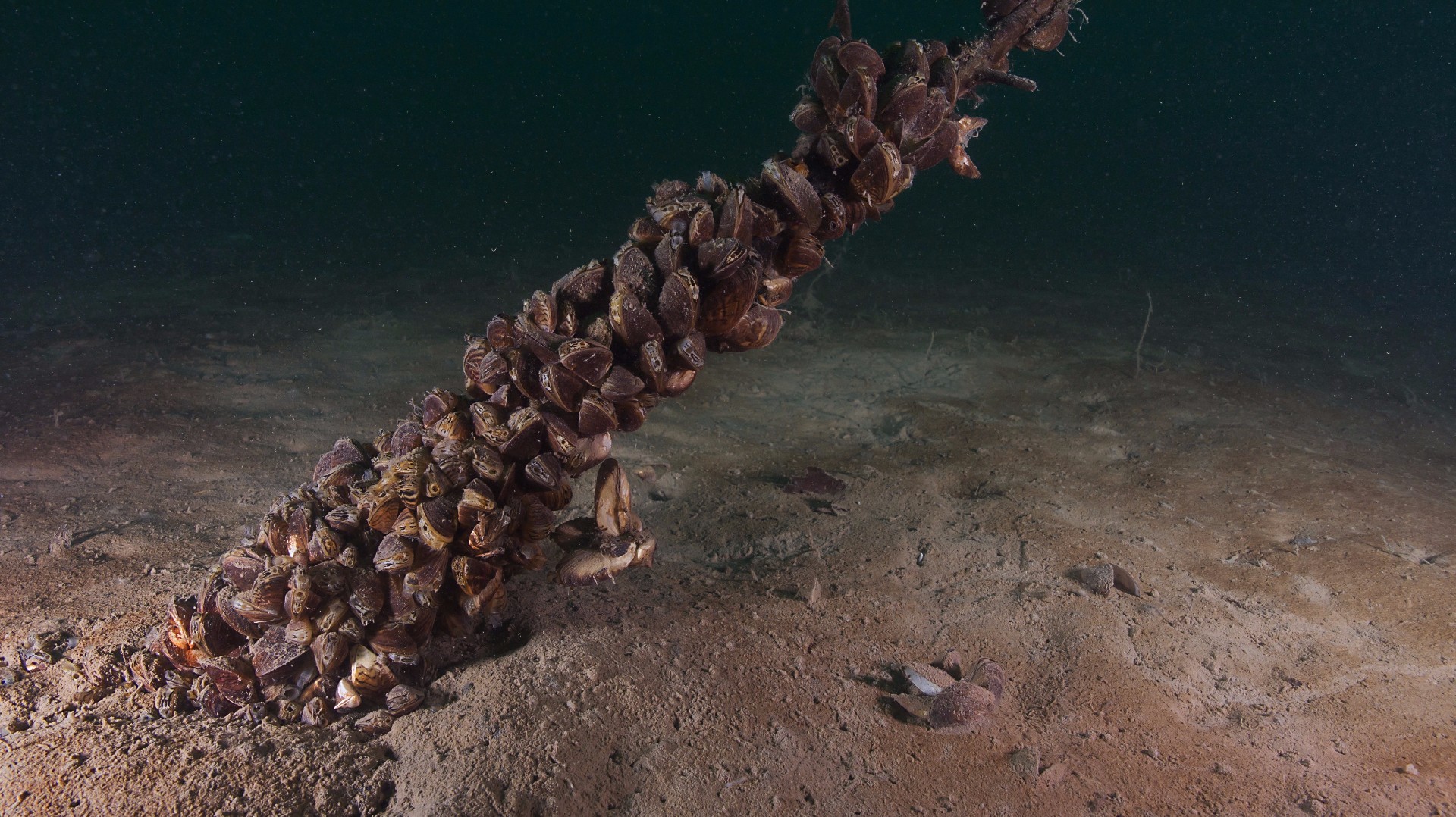
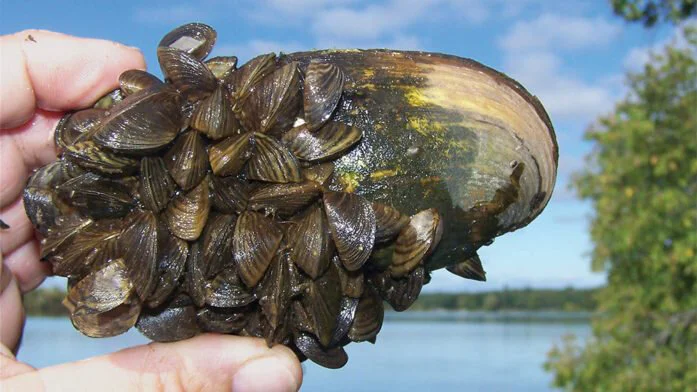
- Small freshwater mussels originally from Eurasia.
- They attach to boats, docks, pipes, and native mussels.
- They filter large amounts of plankton from water, disrupting food webs and harming fish populations.
- Zebra mussels are now found in hundreds of Minnesota lakes and rivers.
Eurasian Watermilfoil
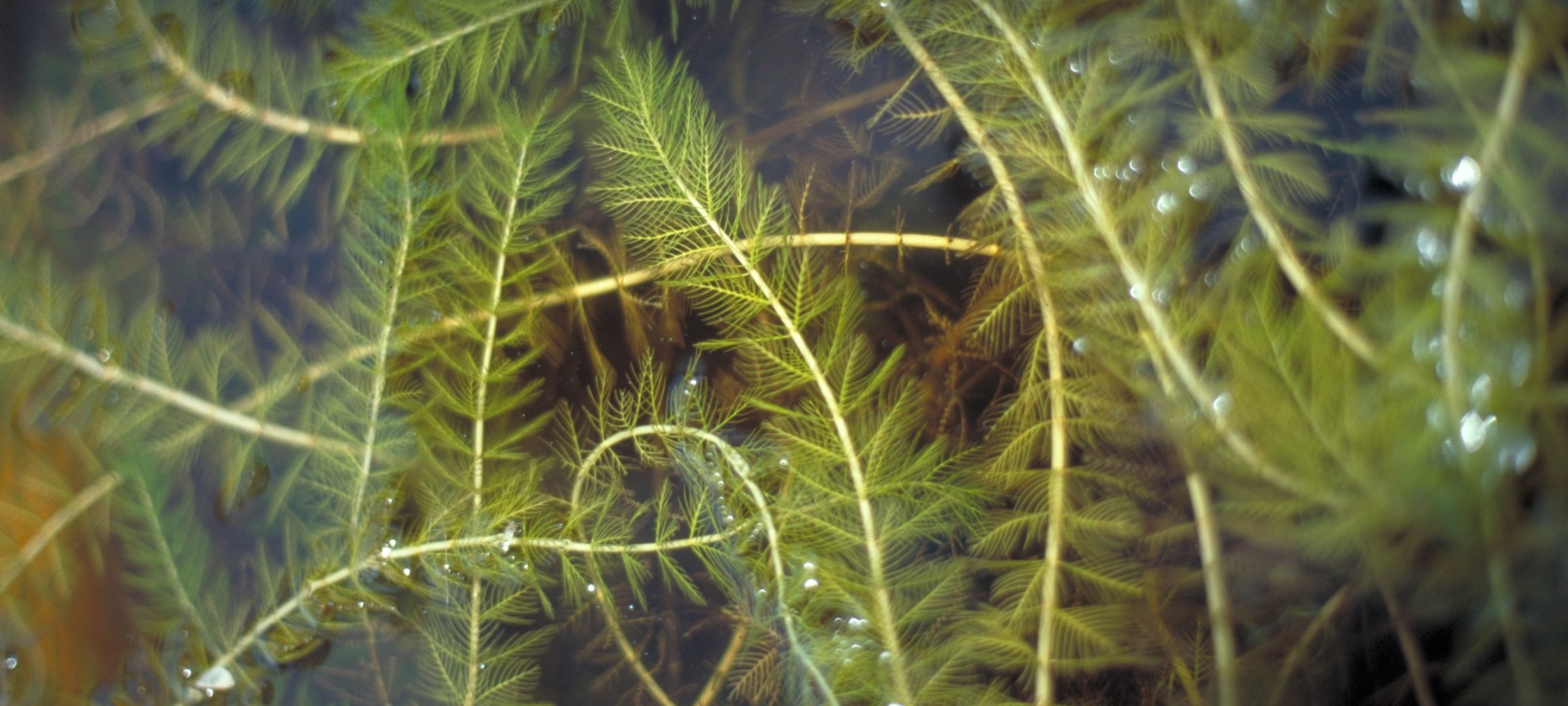
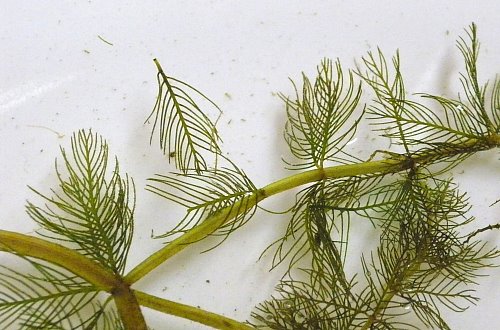
- A non-native aquatic plant that forms thick underwater mats.
- It blocks sunlight for native plants and interferes with boating and swimming.
- It spreads easily when fragments attach to boats or fishing gear.
Aquatic Invasive Species in Mitchell Lake
- Detected: Curly-leaf Pondweed, Eurasian Watermilfoil, Brittle Naiad
Help us minimize the spread of Aquatic Invasive Species!
Adopt a Dock is a citizen science initiative in which lakeshore residents monitor for Aquatic Invasive Species (AIS).
Stop invasive species (Zebra mussels) via Adopt-A-Dock Program
Why Aquatic Invasive Species Are a Problem?
AIS can cause several major impacts:
Environmental impacts
- Displace or kill native species
- Alter aquatic food webs
- Reduce biodiversity
Economic impacts
- Increase costs for lake management
- Harm fishing
Recreational impacts
- Make swimming dangerous (sharp shells)
- Create dense plant growth that blocks boating and fishing
Terrestrial Invasive Species
Terrestrial invasive species in Minnesota are non-native plants, animals, or insects that live on land and spread rapidly, causing harm to ecosystems, agriculture, and native wildlife. Because they lack natural predators in their new environment, they often grow or reproduce quickly and outcompete native species for food, water, and habitat.
Key Characteristics
Terrestrial invasive species in Minnesota typically:
- Originate from other countries or regions
- Spread quickly through natural processes or human activity
- Displace native plants and animals
- Cause ecological, economic, or agricultural damage
They often spread through:
- Transportation of seeds in soil, clothing, or vehicles
- Landscaping and ornamental plants
- Movement of firewood
- Trade and travel
Examples of Terrestrial Invasive Species in Minnesota
Garlic Mustard
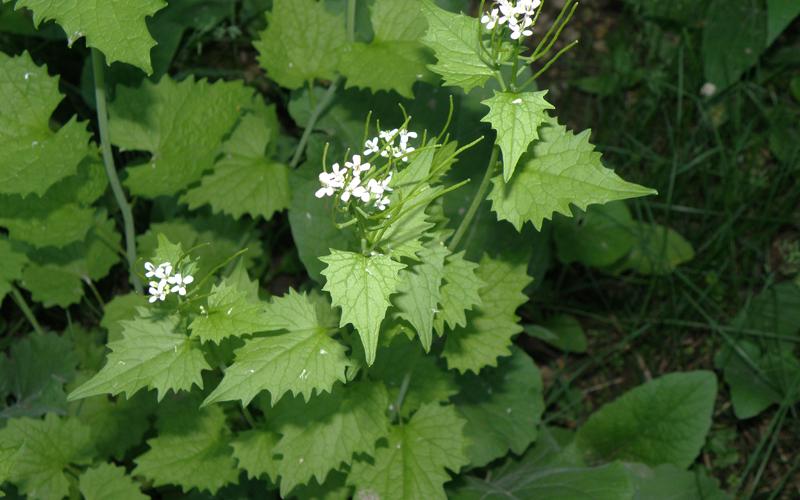

- A fast-spreading invasive plant originally from Europe.
- Grows in forests and crowds out native wildflowers.
- Produces chemicals that prevent other plants from growing in the soil.
Emerald Ash Borer

- A metallic green beetle from Asia.
- Larvae tunnel under the bark of ash trees, cutting off nutrients.
- Has killed millions of ash trees across Minnesota and North America.
Buckthorn
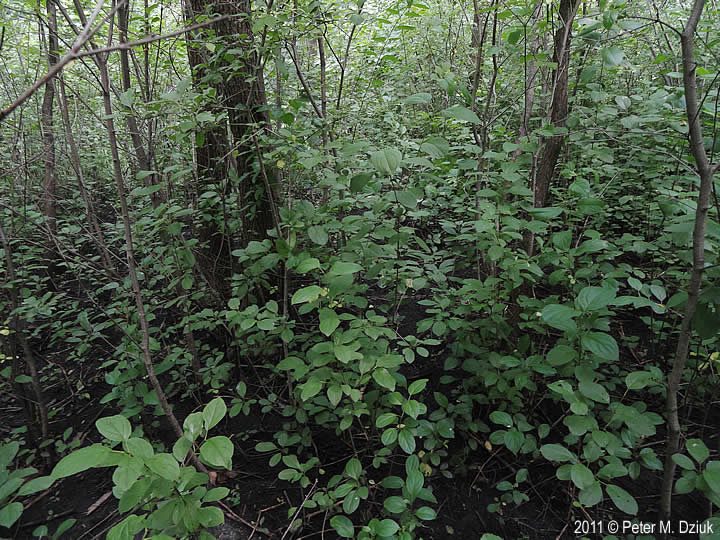
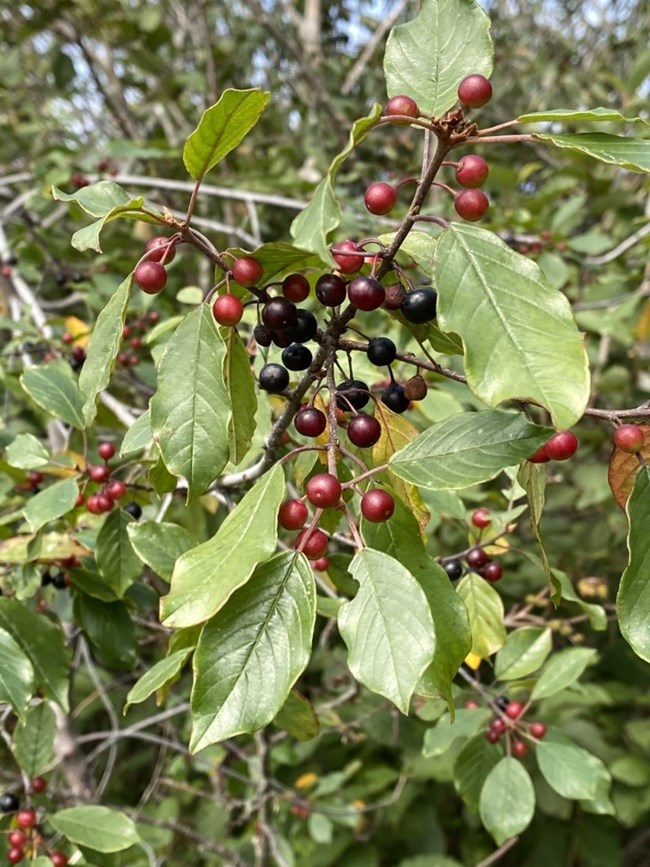
- An invasive shrub introduced from Europe for hedges.
- Forms dense thickets that block sunlight for native plants.
- Alters soil conditions and reduces biodiversity in forests.
Impacts of Terrestrial Invasive Species
Environmental impacts
- Loss of native plant and animal species
- Reduced biodiversity
- Altered soil and forest ecosystems
Economic impacts
- Damage to forests and agriculture
- Costly control and management programs
Recreational impacts
- Degraded natural areas and wildlife habitats
- Changes to hunting, hiking, and outdoor experiences